

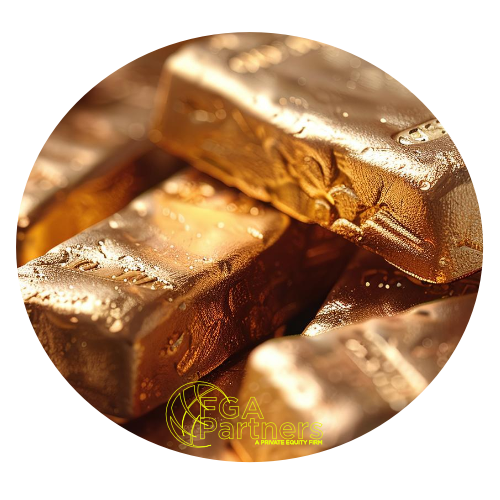
For historical reasons we have added the below information as a tool for educating investors as to the history of gold. Before investing in gold, you must understand its history – a history that, like that of no asset class, has a unique influence on its own supply and demand today. Those that are still in a love affair with gold still cling to a past when gold was king. But gold’s past includes also a fall, which must be understood to properly assess its future.
This statement foresaw one of the most draconian events in U.S. financial history: the Emergency Banking Act occurred that same year, forcing all Americans to convert their gold coins, bullion and certificates into U.S. dollars. While the Act successfully stopped the outflow of gold during the Great Depression, it did not change the conviction of those who are forever confident in gold’s stability as a source of wealth.
For 5,000 years, gold’s combination of luster, malleability, density and scarcity has captivated humankind like no other metal. According to Peter Bernstein’s book “The Power of Gold: The History of Obsession”, gold is so dense that one ton of it can be packed into a cubic foot. At the start of this obsession, gold was used solely for worship. A trip to any of the world’s ancient sacred sites demonstrates this. Today, gold’s most popular use is in the manufacture of jewelry.
Around 700 B.C., gold was made into coins for the first time, enhancing its usability as a monetary unit: before this, gold, in its use as money, had to be weighed and checked for purity when settling trades. Gold coins, however, were not a perfect solution since a common practice for centuries to come was to clip these slightly irregular coins to accumulate enough gold that could be melted down into bullion. But in 1696, the Great Recoinage in England introduced a technology that automated the production of coins, and put an end to clipping.
Since it could not always rely on additional supplies from the earth, the supply of gold expanded only through deflation, trade, pillage or debasement. The discovery of America in the 15th century brought the first great gold rush. Spain’s plunder of treasures from the New World raised Europe’s supply of gold five-fold in the 16th century. Subsequent gold rushes in the Americas, Australia and South South Africa took place in the 19th century.
Europe’s introduction of paper money occurred in the 16th century, with the use of debt instruments issued by private parties. While gold coins and bullion continued to dominate the monetary system of Europe, it was not until the 18th century that paper money began to dominate. The struggle between paper money and gold would eventually result in the introduction of a gold standard.
The gold standard is a monetary system in which paper money is freely convertible into a fixed amount of gold. In other words, in such a monetary system gold backs the value of money. Between 1696 and 1812, the development and formalization of the gold standard began as the introduction of paper money posed some problems. In 1797, due to too much credit being created with paper money, the Restriction Bill in England suspended the conversion of notes into gold.
By 1821, England became the first country to officially adopt a gold standard. The century’s dramatic increase in global trade and production brought large discoveries of gold, which helped the gold standard remain intact well into the next century. As all trade imbalances between nations were settled with gold, governments had strong incentive to stockpile gold for more difficult times. Those stockpiles still exist today. The international gold standard emerged in 1871 following the adoption of it by Germany. By 1900, the majority of the developed nations were linked to the gold standard. Ironically, the U.S. was one of the last countries to join due to a strong silver lobby. From 1871 to 1914, the gold standard was at its pinnacle under near-ideal global political synchronization.
With the outbreak of the Great War in 1914, political alliances changed, international indebtedness increased and government finances deteriorated. While the gold standard was not suspended, it was in limbo during the war, demonstrating its inability to hold through both good and bad times. This created a lack of confidence in the gold standard that only exacerbated economic difficulties. It became increasingly apparent that the world needed something more flexible on which to base its global economy.
The stock market crash of 1929 amplified post-war structural distortions. The pound and the French franc were horribly misaligned; war debts and repatriations were stifling Germany; commodity prices were collapsing; and banks were overextended. Many countries tried to protect their gold stock by raising interest rates to entice investors to keep deposits intact rather than convert them into gold. This only made things worse, and in 1931, the gold standard in England was suspended, leaving only the U.S. and France with large gold reserves.
Since the dramatic rise in gold since 2008, investors and even Central Banks have made an effort to acquire gold. This race has been sparked by the world economic events that span from the United States and now throughout Europe, threatening the very foundation of the European Union. This race for gold has reduced the supply of gold globally, hence the dramatic rise in gold prices. Some analysts believe that gold may reach US$3000 per ounce or more, while others sit on the sidelines as we continue onward and beyond.
Seeking physical raw materials logistics or liquidation support? Both Gold Buyers and Sellers can contact FGA via our contact page.